Next-Gen Wearables
Beyond step counting: the rise of smart rings, non-invasive health monitoring, and the metrics that actually impact your daily routine.
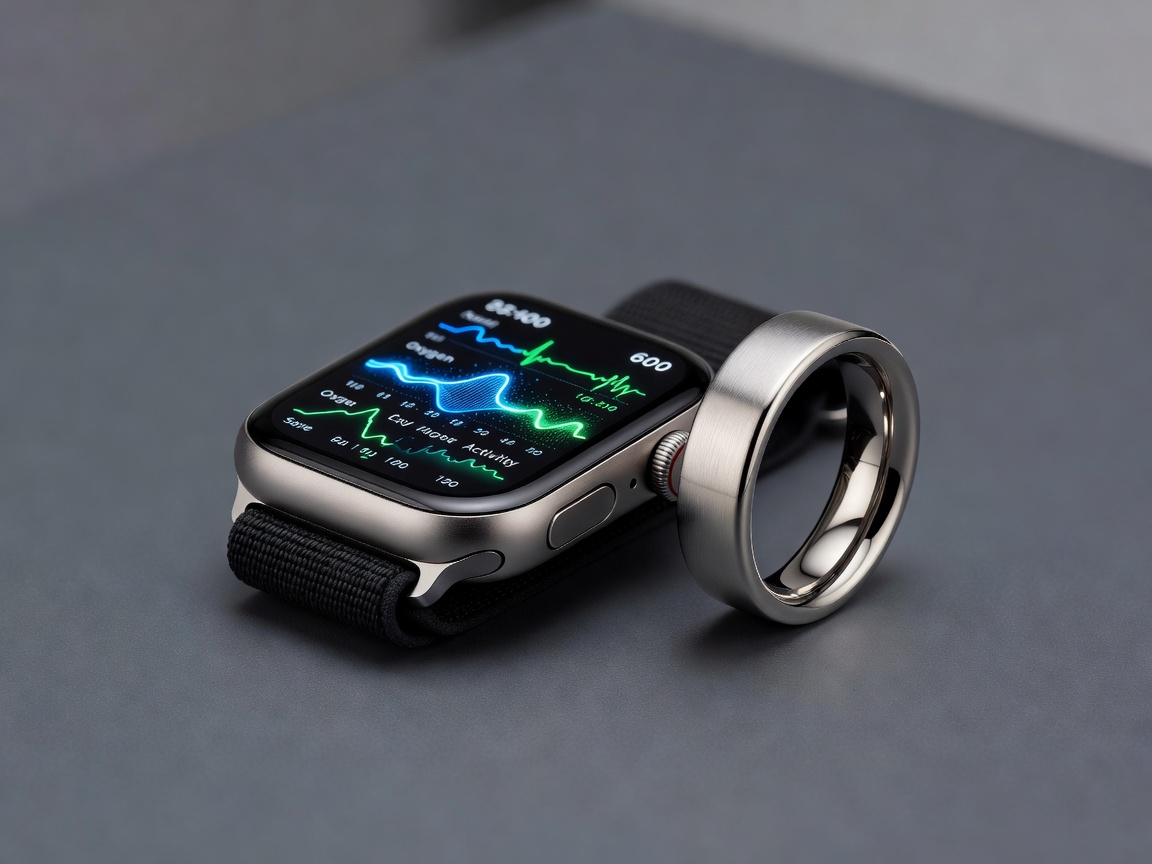
Wearable technology has evolved from simple accelerometers strapped to the wrist into sophisticated, clinical-grade biometric laboratories. The primary goal of a wearable is no longer simply to shame the user into moving more; it is to provide actionable, holistic insights into physical recovery, sleep architecture, and overall systemic stress.
The Rise of the Smart Ring
While the smartwatch remains the dominant form factor for notification triage and active workout tracking, the smart ring has captured the focus of users prioritizing passive health monitoring. Rings possess unique physiological and practical advantages over wrist-worn devices.
Fingers contain a rich network of capillaries close to the skin's surface, making optical heart rate and blood oxygen sensors highly accurate. Furthermore, the form factor is inherently less intrusive. Many users find sleeping with a bulky smartwatch uncomfortable, leading to inconsistent sleep data. A lightweight titanium ring allows for 24/7 wearability, resulting in a much more continuous and reliable dataset regarding resting heart rate (RHR) and heart rate variability (HRV).
Understanding Actionable Metrics
The sheer volume of data generated by modern wearables can be overwhelming. The industry is currently shifting from merely presenting raw data to synthesizing it into daily "readiness" or "recovery" scores. The most crucial metrics to watch include:
- Heart Rate Variability (HRV): The fluctuation in the time intervals between adjacent heartbeats. A higher HRV generally indicates a nervous system that is resilient and ready to adapt to stress, while a dropping HRV can precede illness or indicate overtraining.
- Sleep Architecture: Tracking time spent in REM (mental recovery) and Deep Sleep (physical recovery), rather than just total duration.
- Skin Temperature Deviations: Subtle overnight spikes in baseline skin temperature are proving to be highly reliable early indicators of immune system response.
Sensors on the Horizon
The holy grail of wearable technology remains non-invasive blood glucose monitoring and accurate, cuffless blood pressure tracking. While several manufacturers claim to offer approximations, true clinical-grade accuracy without skin penetration is notoriously difficult due to variations in skin tone, thickness, and hydration levels. Current FDA and CE-cleared features are largely restricted to atrial fibrillation (AFib) detection via ECG, sleep apnea tracking via blood oxygen desaturation, and cycle tracking via temperature sensors.
Choosing Your Wearable Strategy
Selecting the right wearable comes down to identifying what behavior you want to modify. If your goal is to stay connected without looking at your phone and you need a screen for pacing during a marathon, a premium smartwatch is indispensable. If your goal is to optimize your sleep habits, monitor background stress levels, and wear traditional mechanical watches during the day, a smart ring provides the ideal unobtrusive alternative. The best wearable is the one you actually wear consistently enough to establish a personal baseline.